| Some often ask.... Where did the tradition of firefighting begin, and who invented it ? |

"as an Ounce of Prevention
is worth a Pound of Cure,"
- Benjamin Franklin
19th c. image of Franklin as Fire Chief.
Ben Franklin moved to Philadelphia from Boston at the age of eighteen. Boston had been
greatly affected by fire. The city of Boston experienced major fires in 1653 and 1676. After the
fire in 1676, Boston purchased a London pumper. The city then hired Thomas Atkins and
twelve other men to fight fires. These were the first paid firefighters in the United States. In
1711, another major fire occurred in Boston. One hundred ten families lost their homes. At the
age of six Benjamin Franklin witnessed this fire. Concerned citizens banded together and
formed The Mutual Fire Societies in 1711. When fire struck a member of the Mutual Fire
Society, other members of the club rushed to help battle the blaze. Each society had
approximately twenty members. Dennis Smith stated the following: “The Mutual Fire Societies
became social as well as protective associations, setting a pattern for organized volunteer
firefighting groups, which would one day be the backbone of firefighting in America and would
dominate it for a century and a half.”
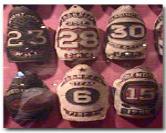
Shields used on the Union Fire Company's helmets.
In 1682, the city of Philadelphia was founded by William Penn. When determining where to
locate the city Penn gave careful thought to the dangers of fire. He had witnessed the London
fire in 1666 and did not want Philadelphia to suffer the same fate. To reduce the possibility of
fire, a fire ordinance in Philadelphia in 1696 required chimney cleaning. Philadelphia also had a
large number of brick buildings that made it less susceptible to fire.
In 1718, Philadelphia bought its first engine. It was named The Shag Rag but it was not put into
service until 1730 when Philadelphia had a fire that destroyed much of the commercial district
along the river. The Shag Rag was no match for the conflagration because it only produced a
trickle of water. In the twelve years the city owned it no one had maintained it. Ben Franklin
urged the city to get better organized to fight fires. Shortly thereafter the city bought four
hundred fire buckets, twenty ladders and hooks and two additional engines.
In 1733, Ben Franklin often wrote about the dangers of fire and the need for organized fire
protection in his newspaper The Pennsylvania Gazette. Ben Franklin was familiar with Boston’
s Mutual Fire Societies which were also known as “Fire Clubs.” But the “Fire Clubs” existed
for the protection of its members, not the community at large. Collins wrote that [Ben Franklin]
“wanted organizations that would battle all fires, regardless of whose property was burning.”
After an extensive fire in Philadelphia in 1736, Franklin created a fire brigade called The Union
Fire company with 30 volunteers. The first full-fledged volunteer firefighter in America was
Isaac Paschall. The idea of volunteer fire brigades gained popularity. Not wanting more than
30-40 men per company, additional companies were formed in Philadelphia. Some of them
were: The Fellowship, Hand-in-Hand and Heart-in-Hand, and Friendship Companies. Each of
the companies paid for their own equipment and located it throughout town at strategic
places. Most early fire companies in Philadelphia and other cities had professionals, wealthier
merchants and tradespeople serving in the volunteer fire department. These citizens were
able to afford to purchase equipment and pay fines for missing meetings and fires.
Some famous Americans who served as volunteer firefighters were: George Washington,
Thomas Jefferson, Benjamin Franklin, Samuel Adams, John Hancock, Paul Revere, Alexander
Hamilton, John Jay, John Barry, Aaron Burr, Benedict Arnold, James Buchanan and Millard
Fillmore also served as volunteer firemen.
In 1818, women began serving as volunteer firefighters. The first recorded female volunteer
was Molly Williams, a black slave who belonged to a New York merchant, Benjamin Aymar of
Oceanus No. 11. Paul Ditzel in Fire Engines, Firefighters provided the following information:
“Molly was a very distinguished volunteer of No. 11 Engine. She used to be called ‘Volunteer
No. 11.’” Molly fought fires wearing a calico dress and checked apron. During a blizzard in
1818, she helped drag the engine to the scene of a fire. She always told those who asked, “‘I
belongs to ole ‘Leven; I allers runs wid dat ole bull-gine.’”
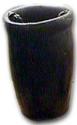
Leather bucket used to fight fires.
In 1820, Marina Betts served as a volunteer in Pittsburgh and claimed she never missed an
alarm during her ten years as a firefighter. Paul Ditzel stated: “Betts became famous for
dumping buckets of water over male bystanders who refused to help fight fires.”
Lillie Hitchcock, a resident of San Francisco, was America’s most famous female firefighter.
She worked with Knickerbocker Engine Company No. 5 beginning in 1851. According to
Frederick J. Bowlen’s account, one day on the way to a fire there were not enough men to pull
the engine for the Knickerbocker Company. Not only that but when the Knickerbocker
Company’s engine was passed by the Manhattan No. 2 and Howard No. 3 on the way to a fire,
the men received humiliating remarks from the other firefighters.
Fifteen year-old Lillie Hitchcock saw their plight and dashed to the vacant spot on the rope.
Pulling with all her might she shouted to the bystanders, “Come on, you men! Everybody pull
and we’ll beat them!” This teenage socialite began attending fires and the company gave her
an honorary membership. Even after her marriage to Howard Coit she was still interested in
firefighting. As time passed she no longer followed the engine to fires but she visited many an
injured firefighter and sent flowers when firemen died in the line of duty. Her estate provided
funds to build a monument to honor volunteer firefighters.
Before 1850 no city in the United States had fully paid, full-time firefighters. Volunteer
firefighters played and continue to play an invaluable role in protecting lives and property.
Fire Service History




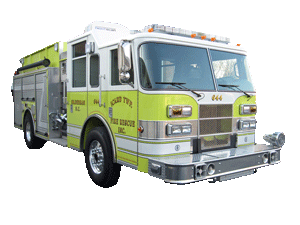
"Serving The Community Since 1954"
| Icard Township Fire / Rescue Inc. |
| |||||||||||||||||||||||||||||||||||||
| Fire News & Events |
|
|
| 2009 Top Responders Fire |
| 2009 Top Responders Medical |
|
| Archives / Past Calls |
| Icard Township Fire / Rescue Inc. 100 First Avenue N.E. Hildebran N.C. 28637 |
|
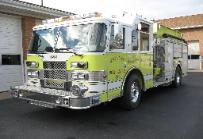
| Apparatus Photos |


| ||||||||||||||||||||||||||||||||||||||||||||||||||||||||||||||||||||||||||||||||||||||||||||||||||||||||||

You are Visitor
Since Jan. 2, 2008
|
|
|
 |
| |
 |
| |
 |
| |
 |
| |
 |
| |
 |
| |
 |
| |
 |
| |
 |
| |
 |
| |
 |
| |
 |
| |
 |
| |
 |
| |
 |
| |
 |
| |
 |
|